Einstein almost certainly never called compound interest the eighth wonder of the world — but the idea behind the quote is right. Compounding is the single most powerful force in personal finance, for savers and borrowers alike.
What compounding means
Simple interest pays you only on what you put in. Compound interest pays you on what you put in and on the returns you've already earned. Over long periods, the returns on returns become larger than the returns on your original money.
Example: 1,00,000 invested at 10% a year.
| After | Simple interest | Compound interest |
|---|---|---|
| 10 years | 2,00,000 | 2,59,374 |
| 20 years | 3,00,000 | 6,72,750 |
| 30 years | 4,00,000 | 17,44,940 |
The Rule of 72
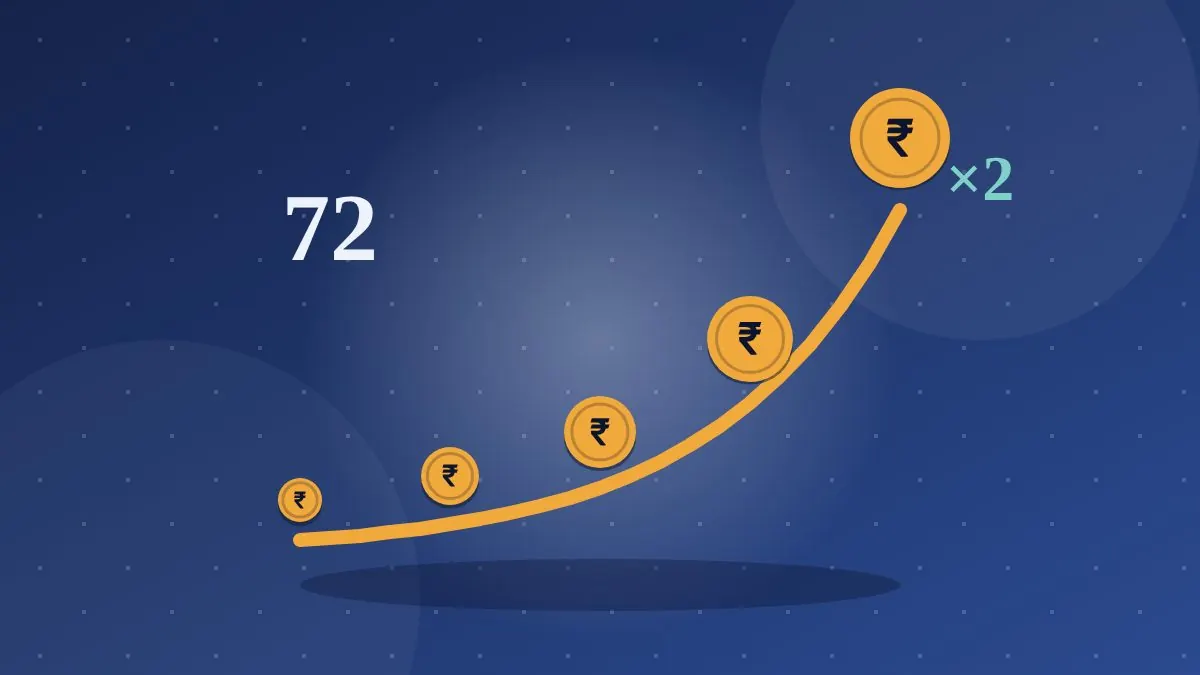
Divide 72 by the yearly return to estimate how many years it takes to double your money:
- 6% → about 12 years
- 8% → about 9 years
- 12% → about 6 years
It works in reverse too: at 6% inflation, prices double in about 12 years.
Time beats amount
Investor A puts away 5,000 a month from age 25 to 35, then stops. Investor B starts at 35 and invests 5,000 a month until 60. At a 10% return, A — who invested less than half as much — ends up with about 1.25 crore at 60, while B ends up with about 67 lakh, because A's money had 25 extra years to compound. Test your own numbers with our SIP calculator.
Compounding against you
- Fees: a 1.5% annual fee instead of 0.5% can cut your final amount by a fifth or more over 30 years.
- Inflation: a 7% return with 5% inflation is only about 2% real growth.
- Debt: credit card interest compounds too — clear it before you invest.
Read next: how to compare loans and building an emergency fund.
Frequently asked questions
What is the Rule of 72?
A shortcut to estimate how long money takes to double: divide 72 by the annual return. At 8%, money roughly doubles in 9 years.
Does compound interest work against borrowers?
Yes. Unpaid interest on credit cards and loans compounds too, which is why debt can grow quickly.
Get stories like this every morning
Top stories, scam alerts and rule changes — free, every morning at 7 am IST.
For general information only — not financial, tax or legal advice. Rules and rates change; verify with official sources or a qualified professional. Read our disclaimer.