One hospital stay can wipe out years of savings. Health insurance is your first line of defence — but the cheapest premium rarely means the best policy. Here's what to look at before you buy or renew.
How much sum insured?
Hospital costs in large cities have risen fast. As a starting point:
| Family | Metro / tier-1 city | Smaller city |
|---|---|---|
| Single adult | ₹10 lakh | ₹5–10 lakh |
| Couple with children | ₹15–25 lakh floater | ₹10–15 lakh floater |
| Parents above 60 | Separate policy, ₹10 lakh+ | Separate policy, ₹5–10 lakh |
The cost-effective way to get high cover is a base policy plus a super top-up. A super top-up pays once your total claims in a year cross the deductible (for example ₹5 lakh), and costs far less than raising the base cover by the same amount.
Individual vs family floater
A family floater shares one sum insured among family members and is cheaper for young families. But it's priced on the eldest member's age, so keep parents on a separate policy — otherwise one large claim for a parent can exhaust cover for everyone.
Features that matter more than price
- No room-rent cap: a cap such as 1% of sum insured per day can reduce your entire claim proportionately if you choose a costlier room.
- No or low co-payment: co-pay means you pay a fixed share of every claim.
- Restoration benefit: refills your sum insured if it's used up during the year.
- No-claim bonus: increases cover for each claim-free year.
- Cashless network: check that hospitals near you are on the list.
- Day-care and modern treatments: many procedures no longer need a 24-hour stay.
Waiting periods — and the rules that now help you
Under IRDAI rules, the waiting period for pre-existing diseases such as diabetes or hypertension can be at most 3 years (previously 4). The moratorium period is now 5 years (previously 8): after five years of continuous cover, an insurer cannot reject a claim on grounds of non-disclosure, except in cases of fraud.
That's why it pays to buy young and never let the policy lapse — continuity is what makes these protections count. Most policies also have a 30-day initial waiting period (except accidents) and around 2 years for specified illnesses.
Cost and tax
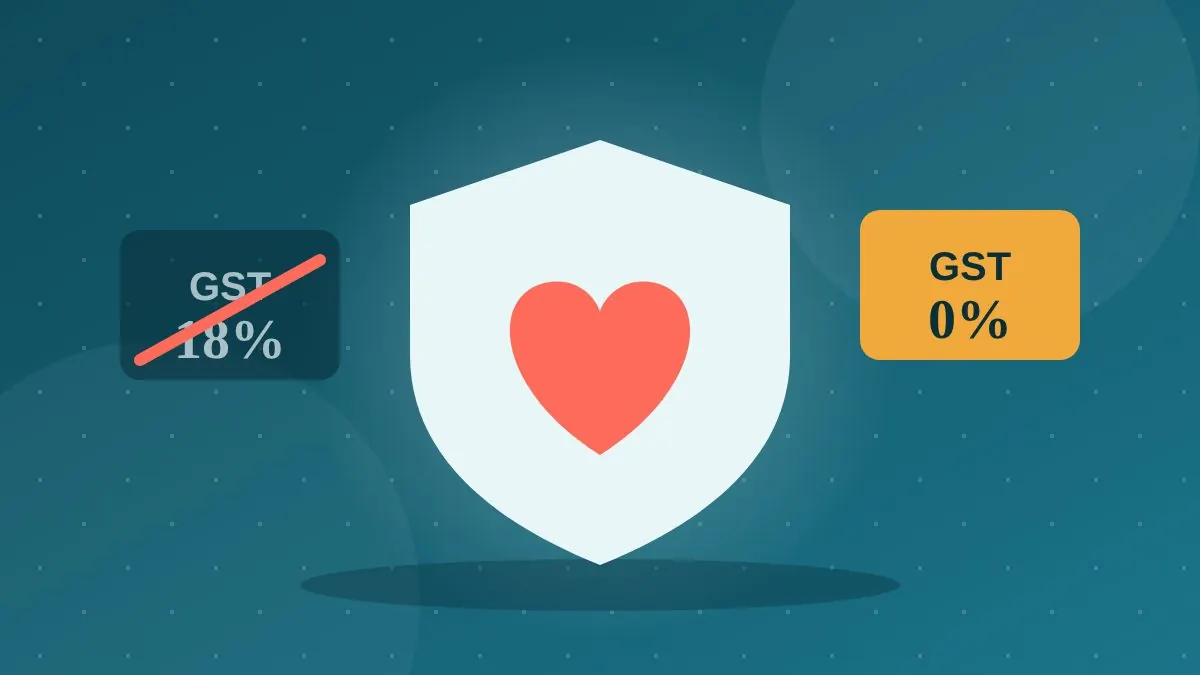
Since 22 September 2025, premiums on individual and family floater health policies are GST-free (previously 18%). Under the old tax regime, Section 80D allows deductions of up to ₹25,000 for self and family and a further ₹25,000 for parents (₹50,000 if they are senior citizens). The new regime gives no 80D deduction — see our tax regime guide.
Is employer cover enough?
Usually not on its own. Group cover often has a low sum insured, may exclude parents, and ends when you change jobs — possibly when you're older or have developed a condition that makes new cover costly. Hold a personal policy alongside it.
Porting your policy
Unhappy with your insurer? You can port to another and carry forward the waiting periods you've already served. Apply well before renewal, and don't let the old policy lapse until the new one is issued.
Frequently asked questions
What is the maximum waiting period for pre-existing diseases?
Under IRDAI rules, insurers can impose a waiting period of at most 3 years for pre-existing diseases.
Is GST charged on health insurance?
No. Since 22 September 2025, individual and family floater health insurance premiums are exempt from GST.
Should parents be on my family floater?
Generally no. A separate policy for parents protects the rest of the family's cover and avoids higher floater premiums.
Get stories like this every morning
Top stories, scam alerts and rule changes — free, every morning at 7 am IST.
For general information only — not financial, tax or legal advice. Rules and rates change; verify with official sources or a qualified professional. Read our disclaimer.