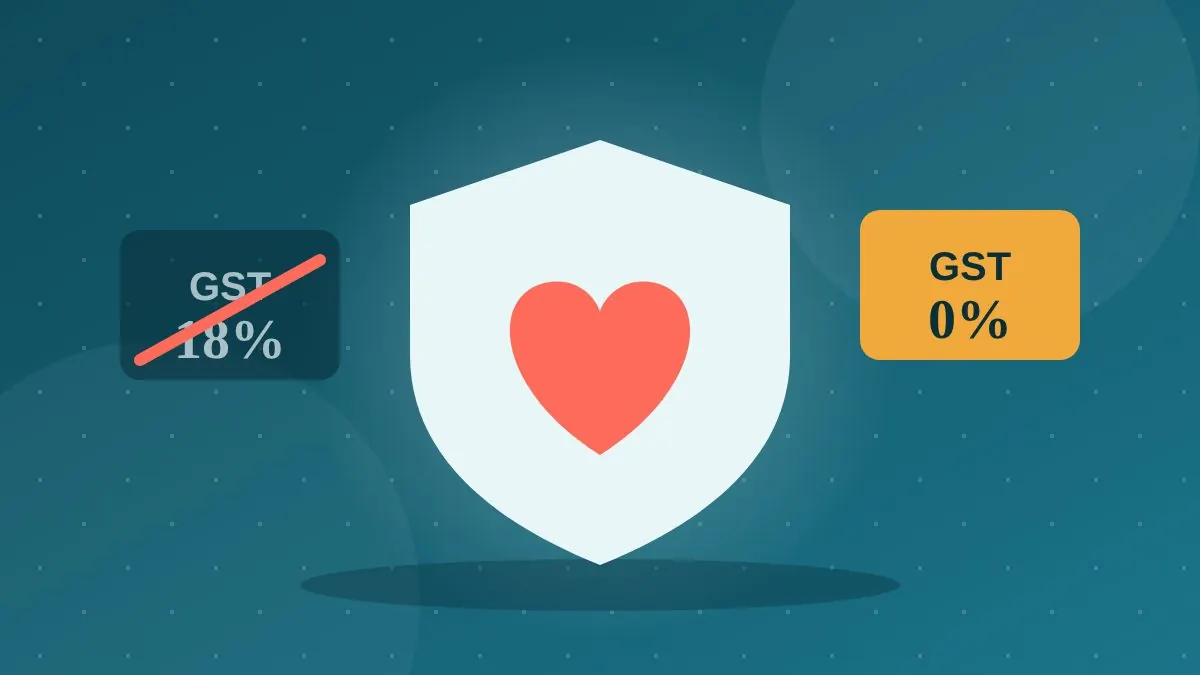
More than a year after the change, many policyholders still aren't sure whether they're paying GST on their insurance. The short answer: if you hold an individual life or health policy, you shouldn't be.
What changed
From 22 September 2025, GST on all individual life and individual health insurance policies was cut from 18% to zero. The exemption covers term plans, ULIPs, endowment policies, family floater health plans and senior citizen covers.
The date of payment decides the tax: premiums paid on or after 22 September 2025 are exempt, even for policies bought earlier.
What's not covered
- Group insurance — such as the health cover your employer provides — still carries 18% GST.
- Motor and other general insurance products are not part of this exemption.
Are premiums really lower?
Removing GST should cut the amount you pay by up to around 15% (18% on the base premium). In practice, insurers can no longer claim input tax credit on their own costs, which can push base premiums up at renewal. So compare your total outgo year on year, not just the GST line.
What to do at renewal
- Check the premium breakdown on your renewal notice — there should be no GST.
- If the base premium has jumped, ask the insurer why, and compare with other plans. You can port your health policy without losing waiting-period credit.
- Use the savings to increase cover — for example, adding a super top-up or raising your term insurance sum assured.
If an insurer charges GST wrongly or won't resolve a complaint, you can escalate through IRDAI's Bima Bharosa portal.
Frequently asked questions
Is there GST on health insurance in 2026?
No GST applies to individual and family floater health insurance premiums paid on or after 22 September 2025.
Does the exemption cover employer group insurance?
No. Group insurance policies continue to attract 18% GST.
Get stories like this every morning
Top stories, scam alerts and rule changes — free, every morning at 7 am IST.
For general information only — not financial, tax or legal advice. Rules and rates change; verify with official sources or a qualified professional. Read our disclaimer.