If anyone depends on your income — a spouse, children, parents, or a home loan — term insurance is the single most important financial product you can buy. It's also the cheapest form of life cover, which is exactly why it's so often skipped in favour of policies that agents prefer to sell.
What term insurance does (and doesn't) do
A term plan pays a fixed sum — the sum assured — to your nominee if you die during the policy term. If you survive the term, a pure term plan pays nothing. That's not a flaw: because there's no savings component, the premium is a small fraction of what an endowment or money-back policy with the same cover would cost.
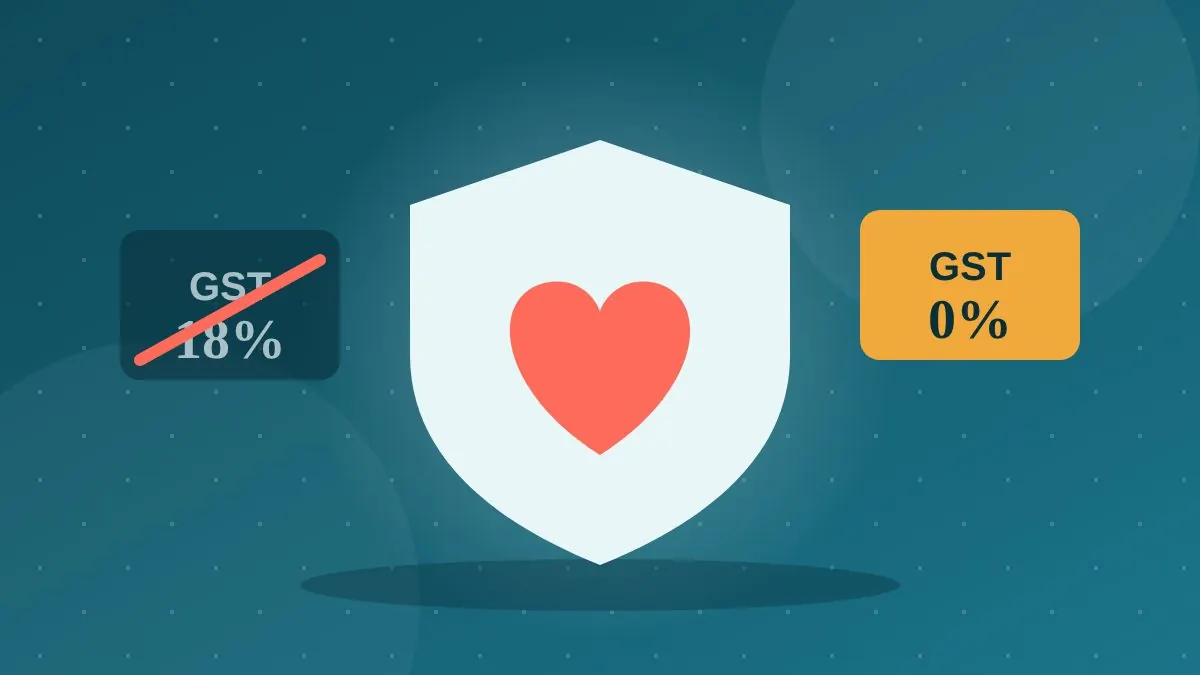
Since 22 September 2025, premiums on individual life insurance policies, including term plans, are exempt from GST. Earlier, 18% GST was added on top. Group policies through employers still attract GST.
How much cover do you need?
A widely used starting point is 10 to 15 times your annual income. A more precise method adds up what your family would actually need:
- Income replacement: annual household expenses you cover × the number of years until your youngest dependant is independent.
- Outstanding loans: home loan, car loan, personal loans.
- Future goals: children's higher education and marriage, in today's money plus inflation.
- Minus existing life cover and investments your family could use.
Example: a 32-year-old earning ₹12 lakh, spending ₹6 lakh a year on the family, with a ₹40 lakh home loan and two young children, could need ₹1.5–2 crore of cover. An employer's group cover rarely comes close — and it ends when you leave the job.
Choosing the policy term
Cover yourself until your dependants become financially independent and your loans are repaid — typically up to age 60 or 65. Cover until 85 or 99 sounds attractive but raises the premium sharply for years when most people no longer have dependants.
Riders worth considering
| Rider | What it does | Worth it? |
|---|---|---|
| Accidental death benefit | Extra payout if death is due to an accident | Useful if you travel a lot by road; cheap |
| Critical illness | Lump sum on diagnosis of listed illnesses | Compare with a standalone critical illness policy |
| Waiver of premium | Future premiums waived on disability or critical illness | Generally good value |
| Return of premium | Premiums refunded if you survive | Usually poor value — costs far more than plain term |
How to compare insurers
- Claim settlement ratio: the share of claims paid, published annually in the IRDAI report. Look for a consistent record over several years, not one good year.
- Amount settled ratio: some insurers pay many small claims but contest large ones. This figure shows the share of claim value paid.
- Solvency and size: a long track record matters for a policy that may run 30+ years.
- Premium: only after the above. A slightly higher premium with a stronger claims record is usually the better buy.
Mistakes that get claims rejected
- Hiding health facts or habits. Smoking, alcohol, existing conditions, family history — disclose everything. Non-disclosure is the most common reason claims fail.
- Understating or overstating income. Cover is tied to income proof; inconsistencies can be investigated after a claim.
- Not telling the family. Keep the policy document accessible and make sure your nominee knows the insurer and policy number.
- Letting the policy lapse. Use auto-debit and note the grace period.
Next, make sure medical costs are covered too: read our health insurance guide.
Frequently asked questions
Is there GST on term insurance premiums?
No. Since 22 September 2025, individual life insurance policies, including term plans, are exempt from GST. Group policies still attract 18% GST.
How much term insurance should I buy?
A common starting point is 10–15 times your annual income, adjusted for loans, future goals and existing savings.
Does term insurance pay anything if I survive?
A pure term plan does not. Return-of-premium plans do, but they cost much more.
Get stories like this every morning
Top stories, scam alerts and rule changes — free, every morning at 7 am IST.
For general information only — not financial, tax or legal advice. Rules and rates change; verify with official sources or a qualified professional. Read our disclaimer.