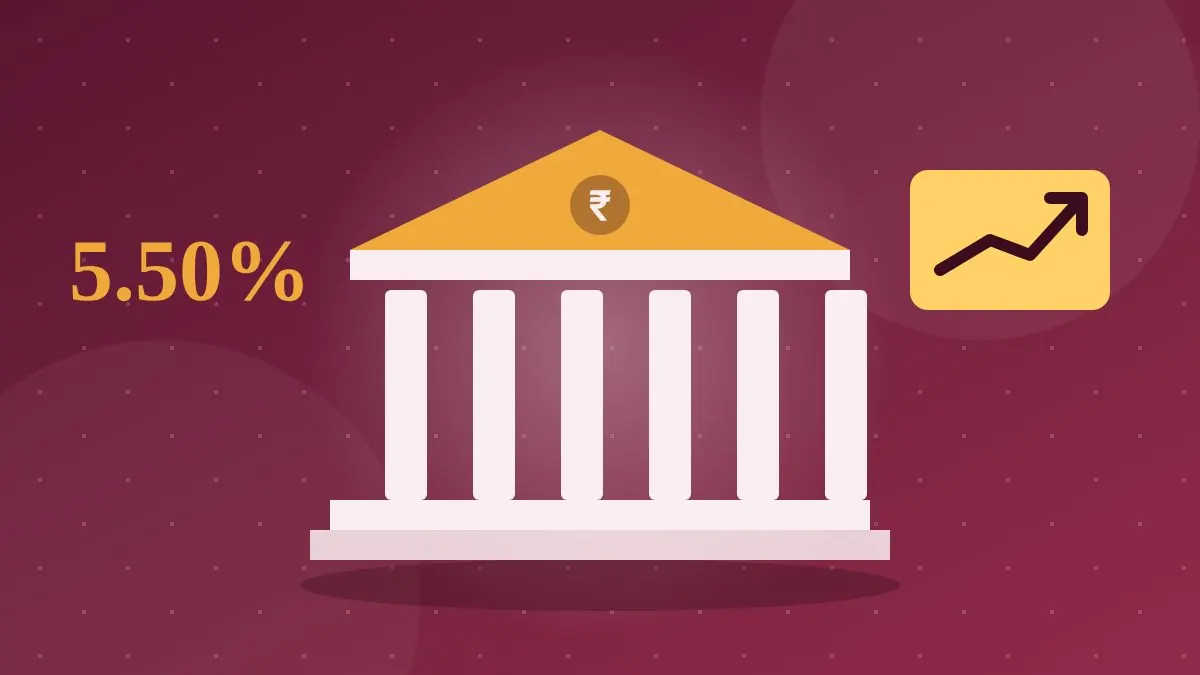
The Reserve Bank of India has raised its key lending rate for the first time in this cycle. The Monetary Policy Committee voted unanimously on 7 October 2026 to lift the repo rate by 25 basis points to 5.50%, and changed its policy stance to "calibrated tightening".
Why the RBI raised rates
The central bank pointed to a tougher inflation outlook — higher food and energy prices, volatile crude oil and renewed geopolitical tension — alongside rate hikes by major central banks abroad. It signalled that rate cuts are off the table in the near term; the next move could be another hike or a pause, depending on how inflation behaves.
With the repo rate at 5.50%, the standing deposit facility rate is now 5.25%, and the marginal standing facility rate and Bank Rate are 5.75%.
What it means for your EMI
Most home loans in India are linked to the repo rate. When lenders pass on the 0.25% increase, here's the effect on a 20-year loan (illustrative rate moving from 8.50% to 8.75%):
| Loan amount | EMI before | EMI after | Extra per month |
|---|---|---|---|
| ₹30 lakh | ₹26,035 | ₹26,511 | ≈ ₹477 |
| ₹50 lakh | ₹43,391 | ₹44,186 | ≈ ₹794 |
Many banks keep your EMI unchanged and extend the tenure instead. On the ₹50 lakh example, that adds roughly 13 months of EMIs to a new 20-year loan. If you can afford it, asking for a higher EMI rather than a longer tenure saves interest. Check your own loan with our EMI calculator.
What borrowers and savers should do now
- Borrowers: look out for your lender's rate-reset letter. Consider a part-prepayment to offset the increase — floating-rate loans to individuals carry no prepayment charges. Our home loan guide explains how.
- Savers: fixed deposit rates often rise after a hike, so it can pay to stagger new FDs rather than locking everything in at once.
- Planning a new loan: a credit score above 750 matters more when rates are rising — see how to improve your CIBIL score.
The MPC's next meeting is scheduled for 2–4 December 2026.
Frequently asked questions
What is the current repo rate?
5.50%, after the RBI's Monetary Policy Committee raised it by 25 basis points on 7 October 2026.
Will my EMI go up automatically?
On most floating-rate home loans, banks first extend the tenure and keep the EMI the same. You can ask your lender to raise the EMI instead, which saves interest.
Get stories like this every morning
Top stories, scam alerts and rule changes — free, every morning at 7 am IST.
For general information only — not financial, tax or legal advice. Rules and rates change; verify with official sources or a qualified professional. Read our disclaimer.